
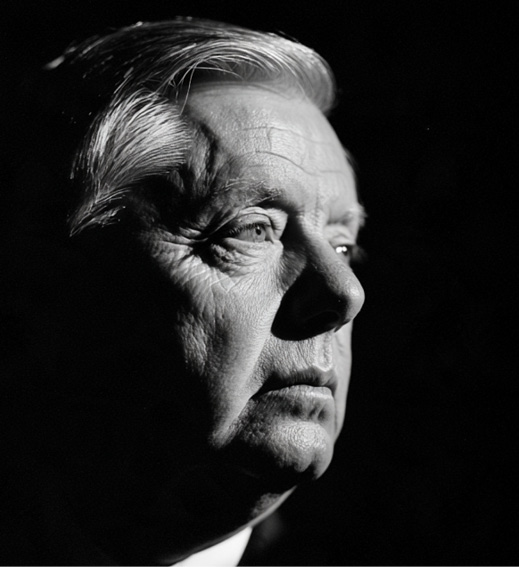
“The Senator Who Never Wavered on Israel”
Chosen posthumously for his extraordinary commitment to Israel and the Jewish people, and for using three decades of influence in Washington to strengthen one of America's most important alliances: Senator Lindsey Graham was among Israel's most steadfast friends in the United States Congress.
A foreign-policy hawk, military veteran and longtime member of the Senate's national-security establishment, Graham treated support for Israel not simply as a political position, but as a strategic and moral commitment.
When it comes to Israel, we have common enemies and common values.
Lindsey Graham, January 2026
That commitment remained unmistakable during the final year of his life. In January 2026, Graham traveled to Jerusalem for what he called one of the most consequential visits to Israel of his political career. After meeting Prime Minister Benjamin Netanyahu, he returned to Washington advocating a dramatically deeper U.S.-Israel defense partnership, including joint development of next-generation weapons that he compared to a "21st century Manhattan Project."
Few American politicians showed up for Israel as consistently as Graham did after October 7. He visited Israel at least a dozen times following the Hamas attack, maintained close relationships with Israeli leaders and repeatedly met families of the hostages, using his position in Washington to keep their cause at the center of American political attention. The American Jewish Committee remembered him as an unwavering advocate for Israel's security, missile defense cooperation and the fight against BDS and antisemitism.
Iran was equally central to Graham's worldview. For years, he warned that a nuclear-armed Islamic Republic would pose an existential danger to Israel and a fundamental threat to the United States and its allies. In 2026, as confrontation with Tehran escalated, Graham remained one of Washington's most forceful advocates for standing alongside Israel and confronting the Iranian regime.
Yet even in his final weeks, Graham was looking beyond war. He was working toward what he believed could become one of the great diplomatic achievements of the era: normalization between Israel and Saudi Arabia. Graham saw Saudi-Israeli peace as the cornerstone of a new Middle East, one capable of surviving the confrontation with Iran and permanently changing Israel's position in the region.
Graham died suddenly on July 11, 2026, at the age of 71. The reaction from Israel reflected how unusual his relationship with the Jewish state had become. Prime Minister Netanyahu called him a "beloved friend," while Israeli leaders across the political spectrum mourned one of the country's strongest allies in Washington. Netanyahu later traveled to Washington to attend Graham's funeral, alongside Ukrainian President Volodymyr Zelenskyy and much of America's political leadership.
At a time when support for Israel became increasingly contested on both the American left and right, Lindsey Graham never allowed political fashion to determine where he stood. From confronting Iran and strengthening Israel's defenses to standing with hostage families and pursuing peace with Saudi Arabia, he spent his final years fighting for an alliance he believed made both America and Israel stronger.
That is why, in the year of his passing, Senator Lindsey Graham deserves special recognition in The 36, as one of the Jewish people's most consequential friends.